„Jürgen Habermas, „ultimul mohican” al Iluminismului occidental”, un articol de Paul Gabriel Sandu în Observator Cultural

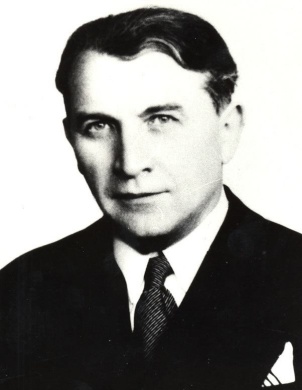
Jürgen Habermas, „ultimul mohican” al Iluminismului occidental

Paul Gabriel Sandu

Juergen Habermas_foto Wolfram Huke

Acum mai bine de 14 ani începeam să traduc Despre Constituția Europei (Zur Verfassung Europas), una dintre cele mai intense și mai mobilizatoare întîlniri intelectuale cu un autor a cărui lucrare o traduceam. Și asta pentru că Habermas, spre deosebire de toate celelalte voci critice la adresa Uniunii Europene și a disfuncționalităților sale, credea în proiectul european cu un entuziasm molipsitor. Cartea, apărută în germană în 2011, iar în română în 2012, nu era un simplu comentariu conjunctural la criza euro, ci încercarea de a salva, din interiorul unei Europe obosite și birocratizate, promisiunea unei democrații postnaționale. Habermas vedea limpede blocajele instituționale, tehnocratizarea deciziilor politice, dezechilibrul dintre piață, pe de o parte, și legitimitatea democratică, pe de alta, dar refuza să transforme aceste eșecuri într-un verdict definitiv împotriva Ideii Europene. Dimpotrivă: el continua să creadă, cu o încăpățînare aproape socratică, faptul că Europa poate deveni mai mult decît o piață și mai mult decît o federație administrativă, că poate deveni un spațiu al solidarității politice și al voinței democratice dincolo de statul-națiune. Tocmai această încăpățînare, această fidelitate față de o posibilitate încă neîmplinită, mi s-a părut atunci – și mi se pare și astăzi – una dintre cele mai recognoscibile semnături habermasiene. (Citeste continuarea pe observatorcultural.ro)

Colegii noștri, Acad. Mircea Dumitru, Prof. Constantin Stoenescu și Prof. Cristian Iftode, laureați ai premiilor revistei Anthropos pentru Cartea de Filosofie a anului 2025

Colegii noștri, Acad. Mircea Dumitru, Prof. Constantin Stoenescu și Prof. Cristian Iftode, laureați ai premiilor revistei Anthropos pentru Cartea de Filosofie a anului 2025

Colegii noștri — Acad. Mircea Dumitru, Prof. Constantin Stoenescu și Prof. Cristian Iftode — se numără printre laureații Premiilor revistei Anthropos pentru Cartea de Filosofie a Anului 2025.

Acad. Mircea Dumitru a fost premiat la categoria Filosofie teoretică și filosofie practică pentru volumul Filosofia și limitele gândirii, apărut la Polirom.

La categoria Exegeză și istorie a filosofiei, Prof. Constantin Stoenescu a fost distins pentru Noi încercări de istoria filosofiei românești (Eikon).

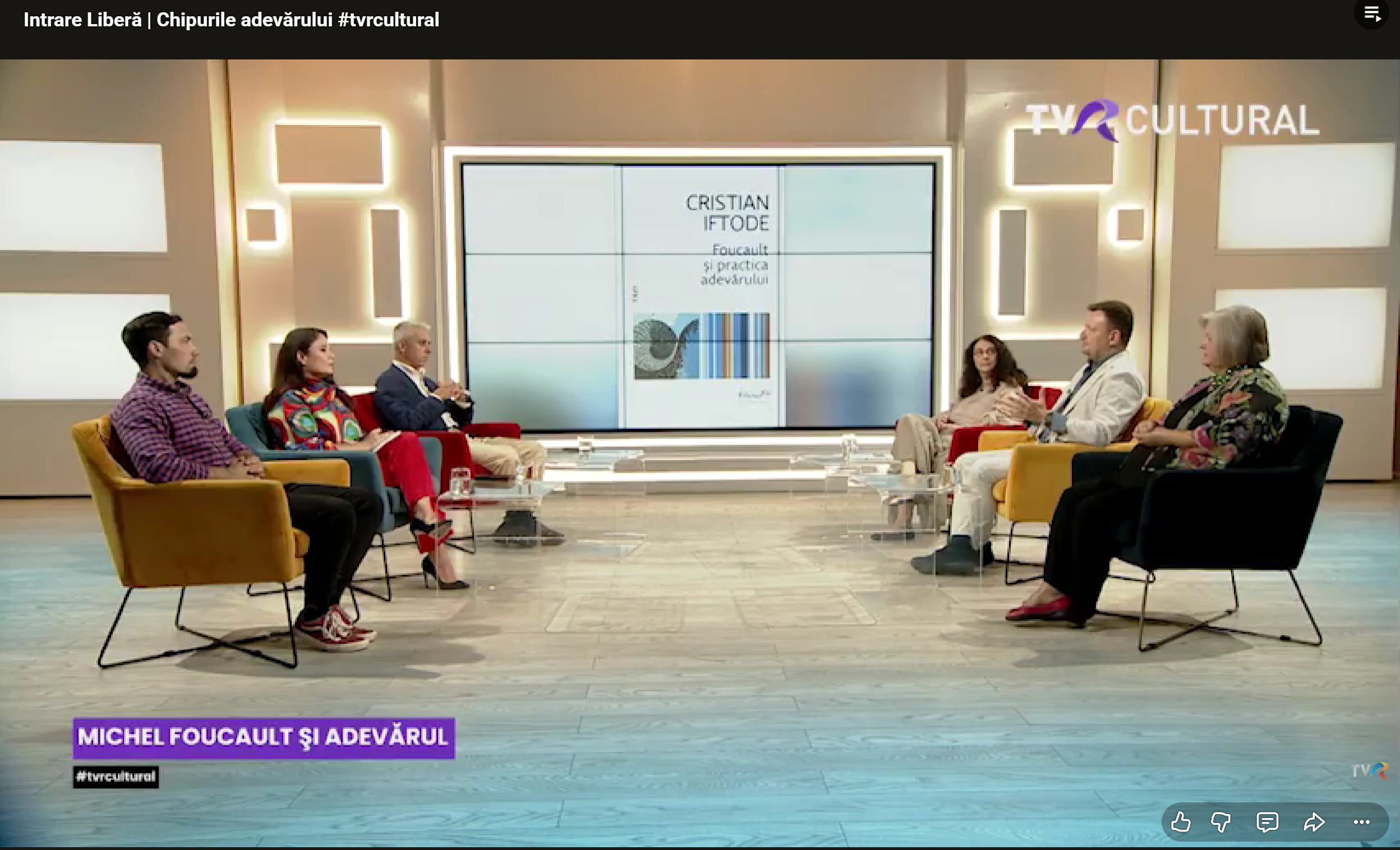
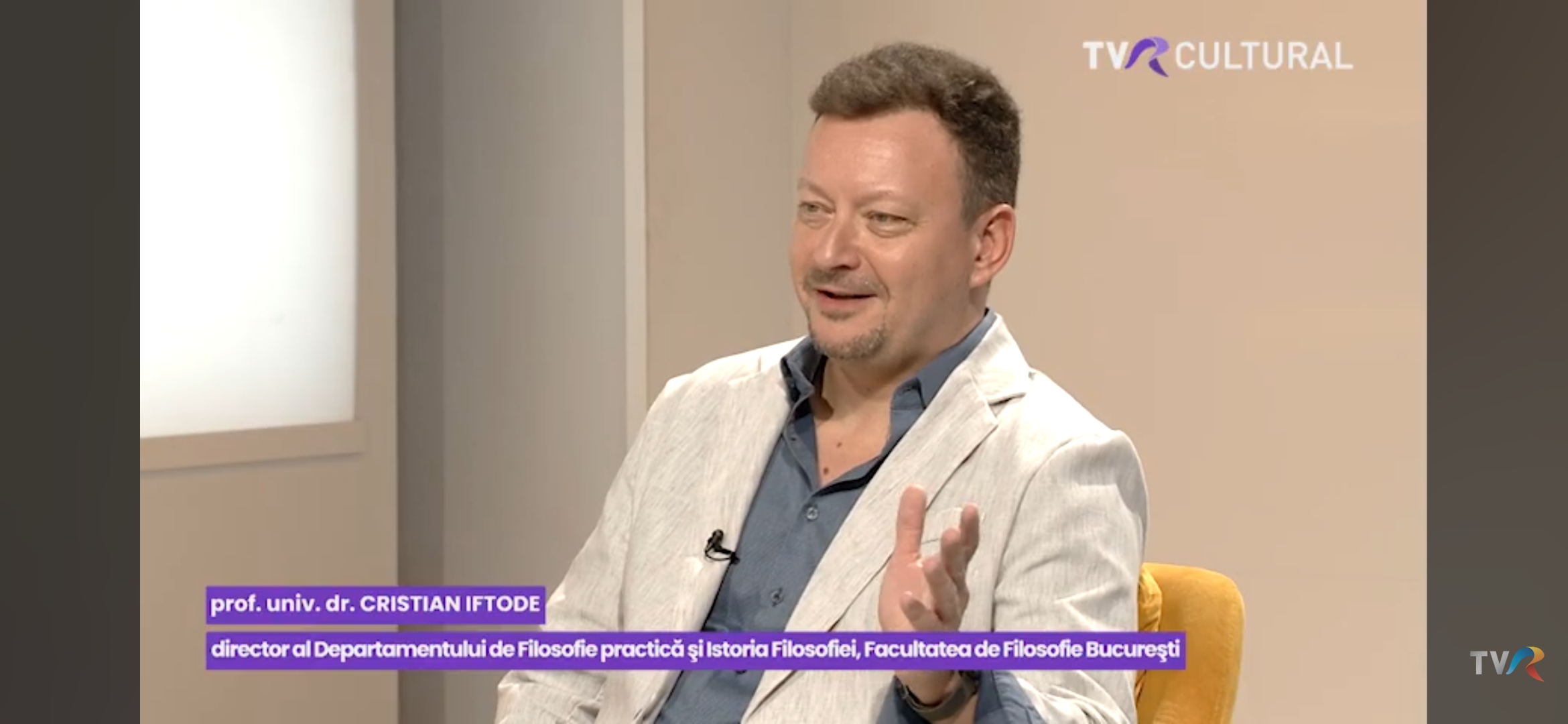
Premiul „George Bondor” i-a revenit Prof. Cristian Iftode pentru volumul Mintea de pe urmă (Editura Trei).

Felicitări pentru această recunoaștere pe deplin meritată!

Pentru detalii, consultați: https://anthropos.ro/2026/04/07/nominalizarile-si-laureatii-premiilor-revistei-anthropos-pentru-cartea-de-filosofie-a-anului-2025/ 

The “International Interdisciplinary Conference of Psychedelic Studies” – June 6th – 7th, 2026

The “International Interdisciplinary Conference of Psychedelic Studies”

June 6th – 7th, 2026

CALL FOR PAPERS

International Interdisciplinary Conference of Psychedelic Studies
IICPS 2026 · June 6–7, 2026 · University of Bucharest, Faculty of Philosophy · Hybrid

Consciousness, Phenomenology, and Emerging Paradigms at the Intersection of Philosophy, Neuroscience, and Clinical Research

About the Conference

The International Interdisciplinary Conference of Psychedelic Studies, organized by PhD Student Raluca Bilașco-Rusu and PhD Student Ștefăniță Manea, Doctoral School of Philosophy, the Faculty of Philosophy of the University of Bucharest (Department of Theoretical Philosophy), brings together philosophers, neuroscientists, psychiatrists, and clinical researchers to engage in rigorous academic dialogue on psychedelic substances and their significance for mind, medicine, and culture.

The conference offers a genuinely interdisciplinary space — one in which phenomenological analysis, neurophilosophical modelling, empirical clinical findings, and questions of ethics and policy are held in productive tension. Presentations will span philosophy of mind, phenomenology, psychiatry, cognitive science, neuroscience, anthropology, and the ethics of psychedelic research.

The event will take place on June 6–7, 2026. Regular presentations will be 20 minutes in length, followed by 10-minute Q&A sessions. Keynote lectures will be 45 minutes followed by a 15-minute discussion period. The conference will adopt a hybrid format: presenters may choose to participate in person or via live stream, and all sessions will be available to remote attendees.

Keynote Speakers

Karl Friston · University College London

Dr. Karl Friston is a British neuroscientist and mathematician, Wellcome Principal Research Fellow at University College London’s Institute of Neurology. He holds fellowships from the Royal Society (FRS), the Academy of Medical Sciences (FMedSci), and the Royal Society of Biology (FRSB), and is among the most cited neuroscientists in the world, with an h-index exceeding 230. He co-invented Statistical Parametric Mapping (SPM), the dominant software for neuroimaging analysis. His central contribution is the Free Energy Principle — a unified mathematical framework proposing that all biological systems minimise „surprise” by updating internal models of the world. From this derives Active Inference, the theory that both perception and action are forms of prediction-fulfillment rather than stimulus-response. In collaboration with Robin Carhart-Harris, he co-authored the REBUS model (2019), which proposes that psychedelics flatten the precision of high-level priors — rigid top-down beliefs — allowing bottom-up signals to dominate, offering a rigorous computational account of ego dissolution and therapeutic change.


Peter Sjöstedt-Hughes · University of Exeter

Dr Peter Sjöstedt-Hughes is a Philosopher of Mind and Metaphysics who specializes in the thought of Whitehead, Spinoza, Nietzsche, and Bergson—and in fields pertaining to panpsychism, pantheism, mental causation, and altered states of consciousness. He is a lecturer at The University of Exeter where he is a lead on the new MSc in Psychedelics: Mind, Medicine, and Culture. Peter is co-director of Europe’s largest psychedelics conference, Breaking Convention, and is on the board of breathwork charity Dreamshadow. He is a member of the drugs advisory committee group, DrugScience, he is on the advisory board of the Tyringham Institute, and is on the team of the established UK independent publisher, Psychedelic Press. Peter is the author of Noumenautics (2015), Modes of Sentience (2021), co-editor and contributor of Bloomsbury’s Philosophy and Psychedelics (2022), the TEDx Talker on ‘psychedelics and consciousness’.


David Luke • University of Greenwich

Dr. David Luke is a British psychologist and Associate Professor at the University of Greenwich, Department of Psychology, Social Work and Counselling. He holds a BSc, MSc, and PhD, and has published over 100 papers and book chapters. He is co-founder and Honorary President of Breaking Convention, Europe’s largest academic conference on psychedelic consciousness. His research focuses on the intersection of psychedelic science and parapsychology — systematically investigating anomalous phenomena such as telepathy, precognition, and entity contact that are frequently reported under psychedelics, applying rigorous empirical methodology to experiences typically dismissed by mainstream science. He is particularly known for his work on DMT-induced entity encounters, exploring whether these experiences demand new ontological categories beyond hallucination or archetype. He has conducted field research across multiple countries, including participant-observation in traditional plant medicine ceremonies.

Invitation to Submit

We invite submissions of original unpublished work from researchers across philosophy, the cognitive and neurosciences, psychiatry, anthropology, and related disciplines. We particularly welcome contributions that engage directly with the guiding questions of the conference and that foster dialogue across disciplinary boundaries.

Submissions from early-career researchers and doctoral candidates are strongly encouraged. The conference is committed to maintaining a genuinely interdisciplinary and intellectually open environment, and welcomes both empirically grounded and purely philosophical contributions.

Thematic Areas

The conference welcomes contributions across the following domains:

– Philosophy of Mind · Phenomenology · Neurophilosophy
– Altered States of Consciousness · Ego Dissolution
– Transformative Experience (L.A. Paul) · Predictive Processing · Enactive/4E Cognition
– Psychedelic-Assisted Therapy · Philosophy of Psychiatry
– Mystical-Type Experiences · Metaphysical Belief Revision
– Ethics of Psychedelic Research · Informed Consent · Epistemic Justice
– Panpsychism, Idealism, and Cosmopsychist Interpretations of Psychedelic Experience

Panel Topics & Guiding Questions

Submissions need not address these questions directly, but may find them generative as orienting frameworks:

– What is the ontological and epistemic status of psychedelic-induced experiences? Can they constitute genuine forms of knowledge?
– How do predictive processing and the REBUS model account for the phenomenology of ego dissolution and oceanic boundlessness?
– In what ways do psychedelic experiences qualify as transformative experiences in L.A. Paul’s sense — and what are the implications for rational decision-making?
– What does the entropic brain hypothesis tell us about the relationship between psychedelic states and ordinary waking consciousness?
– How should philosophy of psychiatry respond to emerging evidence on psychedelic-assisted therapy for treatment-resistant conditions?
– What role do cultural, ceremonial, and ritualistic settings play in shaping the phenomenological content of psychedelic experiences?
– Can non-physicalist interpretations of psychedelic states — panpsychism, idealism, cosmopsychism — be defended on philosophical grounds?
– What ethical frameworks should govern research on psychedelic substances, including questions of vulnerability and epistemic justice?
– How do enactive and 4E approaches to cognition illuminate the embodied dimensions of psychedelic phenomenology?

Submission Guidelines

Abstracts should be submitted in English. Authors are invited to submit an abstract of 400–600 words, excluding references, accompanied by a title, a list of up to five keywords, and the author’s institutional affiliation. Full papers (5,000–8,000 words) may be submitted by authors whose abstracts have been accepted.

All submissions will be subject to double-blind peer review. Please prepare abstracts for anonymous review by removing all identifying information from the document. This information will be written in the body of email. Submissions should be sent in PDF or .docx format via the conference submission platform. Authors may submit to at most one thematic area per submission.

Contact & Submission

For queries and submissions, please contact the Organising Committee:
confpsych2026@gmail.com

Department of Theoretical Philosophy · Faculty of Philosophy · University of Bucharest
Splaiul Independenței nr. 204, Sector 6, Bucharest, Romania

Organised by Raluca Bilașco-Rusu & Ștefăniță Manea, under the supervision of Acad. Prof. Dr. Mircea Dumitru — Faculty of Philosophy, University of Bucharest, 2026.

Decontare abonamente STB: 21, 22, 23 aprilie 2026

Beneficiază de decontarea abonamentelor de transport studenții înmatriculați la forma de învățământ cu frecvență (IF), în vârstă de până la 30 de ani.

Studenții care solicită decontarea abonamentelor STB

trebuie să parcurgă următoarele etape:

  1. Obținerea și vizarea legitimației de student pentru reducere transport la secretariatul facultății;
  2. Procurarea abonamentului de transport în comun STB, nominal. Bonul fiscal, ștampilat pe verso de către emitent – STB, se păstrează de către student pentru decont;
  3. Decontarea unui procent de:

      – 90% din valoarea abonamentului de transport în comun achitată de către studenții înmatriculați la forma de învățământ cu frecvență (IF), în vârstă de până la 30 de ani.

     – 100% din valoarea abonamentului de transport în comun achitată de către studenții cu unul sau ambii părinți decedați, precum și studenții proveniți din centre de plasament sau care au fost în plasament.

DOCUMENTE NECESARE ÎN VEDEREA DECONTĂRII:

  1. Carnetul de student sau legitimația de transport vizate pe anul universitar 2025-2026 (original + copie – se depune copia)
  2. Cardul STB, în original și copie (original + copie – se depune copia)
  3. Bonul fiscal de achiziționare a abonamentului STB, ștampilat pe verso de emitent sau dovada de plată a abonamentului achiziționat online (se vor depune bonuri fiscale numai pentru abonamentele expirate la data decontării)
  4. Extrasul de cont al studentului (în copie, cu codul IBAN). Acesta se aduce o singură dată, la prima decontare, sau atunci când contul / banca se modifică.
  5. Consimțământul privind prelucrarea datelor cu caracter personal în vederea decontării (se depune o singură dată, la prima decontare).

PROGRAM DE PRIMIRE A DOCUMENTELOR PENTRU DECONTARE: 21, 22, 23 aprilie 2026, la secretariat, în programul cu publicul: 12:00-14:00

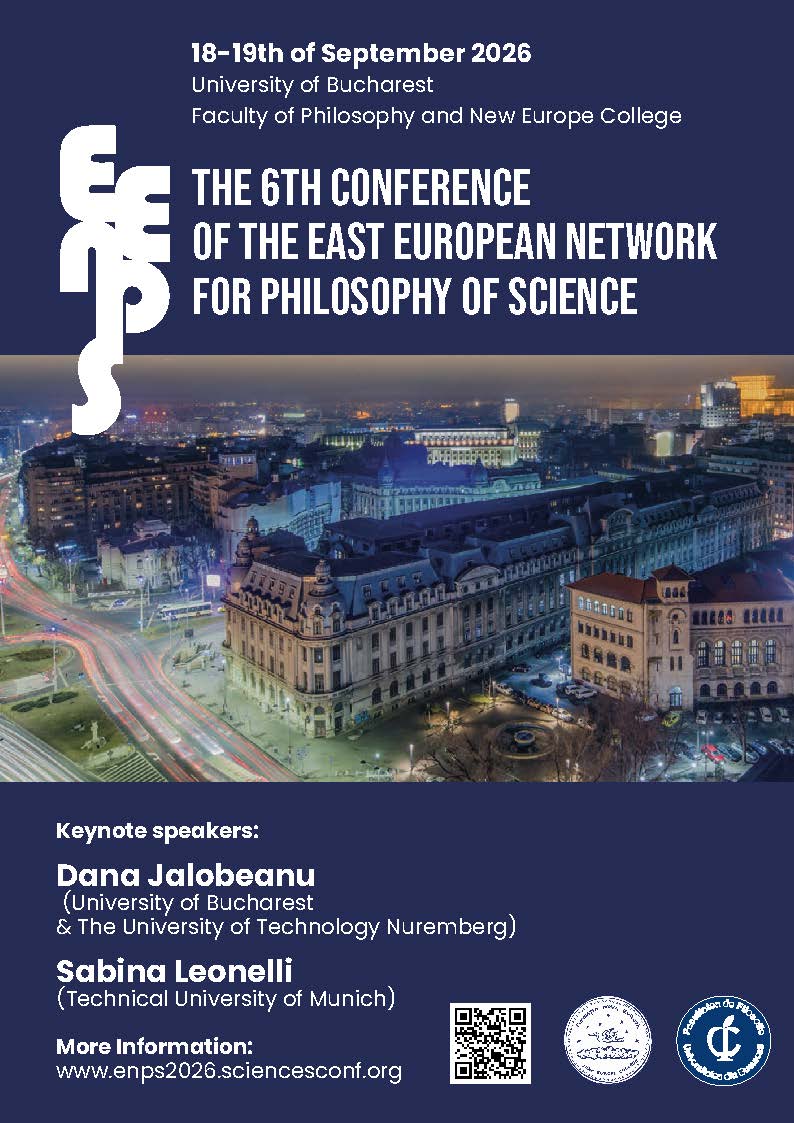
National Conference “Artificial Intelligence: Philosophical Perspectives”: April 18, 2026

National Conference “Artificial Intelligence: Philosophical Perspectives”

April 18, 2026

The programme and more details are going to be posted soon. 

For any information, you can send a message to: paula_pompilia.tomi@upb.ro

Artificial Intelligence is a rapidly expanding field of inquiry. Philosophical engagement with AI spans multiple areas, including ethics, philosophy of mind, and epistemology. It raises fundamental questions such as: Can an AI know? Does an AI understand? What conception of truth is appropriate in the context of AI? Can an AI be considered a moral agent? Who is responsible when AI systems fail? These questions are not merely theoretical; they have direct implications for technological development and practice. The conference aims to bring together philosophers and engineers working on AI, encouraging dialogue across fields and a deeper understanding of the conceptual and practical challenges raised by artificial intelligence.

For more information please visit https://philevents.org/event/show/147729 

O nouă prezentare DFT-CELFIS: Mariona Eiren Miyata-Sturm, ‘The metacognitive account of aesthetics in science’, 30 martie 2026

Următoarea prezentare din cadrul seriei de seminare de cercetare ale Departamentului de Filosofie Teoretică în parteneriat cu CELFIS aparține dr. Mariona Eiren Miyata-Sturm (Universitatea din Oxford). Titlul prezentării sale este ‘The metacognitive account of aesthetics in science’. Rezumatul comunicării este:  
‘What has beauty to with science? Quite a lot, judging by what scientists say and do. It is quite common, for instance, to invoke judgements of beauty, aptness, and harmony when evaluating theories, cleaning data, or making field sketches, to favour simple models, and to be guided by a sense of elegance when solving problems. Through examples, primarily taken from the earth sciences, I show that aesthetics plays a role not just in theorising but also in scientific practice. I argue that this aesthetic aspect of knowledge acquisition can be explained as a special case of affective cognition, and that we can explain broadly aesthetic feelings and judgements in scientific and other epistemic contexts as upshots of metacognitive processes which monitors the quality and likely success of our cognitive engagement with theory and evidence. This allows aesthetic feelings to be rough-and-ready signals of epistemic value and thus explain how they can play a positive role in science. I use the natural sciences as a test case, but if what I argue is on the right track, then this is a common feature of human cognition and so generalises to other epistemic contexts.’

Iată şi o biografie a autoarei:

‘Dr Miyata-Sturm is a Stipendiary Lecturer at New College and a Postdoctoral Associate at the Philosophy Faculty at the University of Oxford, and will be a Postdoctoral Fellow on the ERC-funded project Know-How at the University of Glasgow from July 2026. She works on the aesthetics of science, with a special focus on plate tectonics, and is the author of “Aesthetic Considerations in the Development of Plate Tectonics” (2024), published in Studies in History and Philosophy of Science, and “Aesthetic Feelings in Scientific Reasoning” (2024).’
Conferinţa va avea loc faţă în faţă, în amfiteatrul ‘Titu Maiorescu’ (TM), etajul 1, la sediul Facultății de Filosofie din Splaiul Independenței nr. 204, București. Mai multe detalii despre seria DFT-CELFIS din acest an puteţi afla aici: https://philevents.org/event/show/141649 Înregistrări ale unor seminare anterioare şi ale altor evenimente cu tematică înrudită puteţi găsi pe canalul YB Filosofie Teoretică: https://www.youtube.com/channel/UCOgUq3dN8CXI4L6DhZT1f_Q  
Organizarea prezentării este susţinută de activitatea de practică a studentelor şi studenţilor din programul masteral în ştiinţele cogniţiei ‘Mind the Brain’ (program în limba engleză) de la Facultatea de Filosofie a UB. Mai multe detalii despre program puteţi afla aici: https://filosofie.unibuc.ro/master-of-arts-in-cognitive-science-mind-the-brain/ Doritorii se pot înscrie la etapa de pre-admitere până pe 30 aprilie potrivit detaliilor de aici: https://filosofie.unibuc.ro/admitere-master/  şi mă pot căuta, pentru orice amănunte, la andrei.marasoiu@filosofie.unibuc.ro
Vă aşteptăm!