Facultatea de Filosofie are plăcerea de a vă invita la un eveniment al Cercului de Studii Tomiste din cadrul Centrului pentru Studii de Drept Natural și Analiză Normativă unde sunt afiliați colegii noștri Prof. dr. Mircea Dumitru, Vicepreședintele Academiei Romane și Lect. Dr. Laurențiu Gheorghe
În ultimele decenii, transformarea discursului privind drepturile omului a avut consecințe practice semnificative. În absența unei concepții comune asupra binelui uman, conflictele dintre drepturi riscă să se transforme în confruntări pentru putere socială și politică. Această schimbare are implicații importante în domenii precum sexualitatea, avortul, eutanasia și ameliorarea genetică. În opoziție atât cu subiectivismul, cât și cu pozitivismul juridic, prelegerea propune o concepție teleologică asupra drepturilor, întemeiată pe binele comun. Pornind de la realismul juridic clasic, aceasta abordează, de asemenea, o dificultate semantică inerentă discursului despre drepturi și pledează pentru recuperarea noțiunii clasice de ius, înțeles ca lucrul just, determinat prin raționament prudențial într-un context concret.
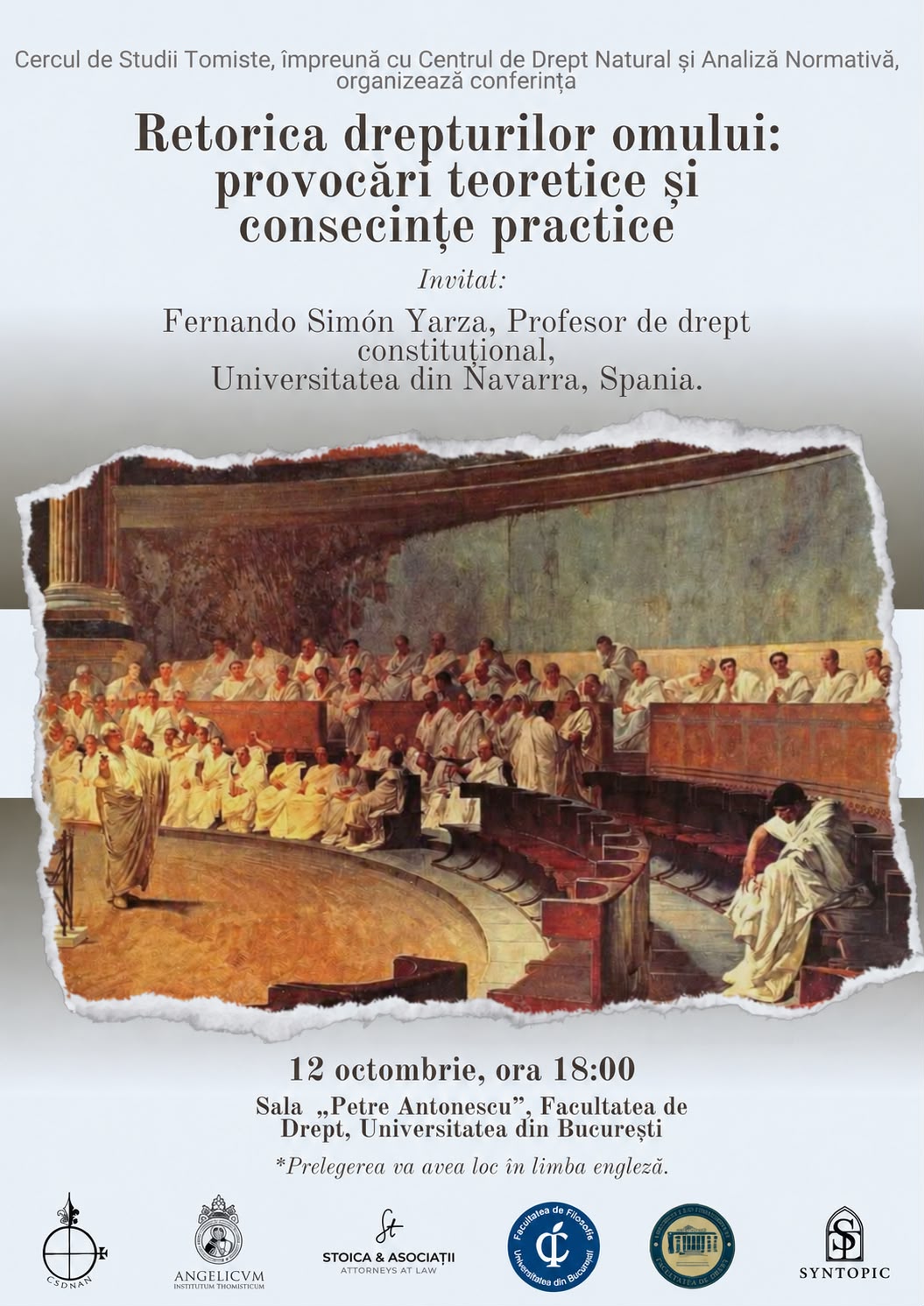
Suntem onorați să vă invităm la cel de-al patrulea eveniment din seria de conferințe organizate în parteneriat de către Institutul Tomist Angelicum din Roma, Cercul de Studii Tomiste al Universității din București, Centrul pentru Studii de Drept Natural și Analiză Normativă și Facultatea de Filosofie, care va avea loc pe data de 12 octombrie 2026, orele 18.00, în Sala „Petre Antonescu” a Facultății de Drept.
Conferința „Retorica drepturilor omului: provocări teoretice și consecințe practice” („Human Rights Discourse: Theoretical Challenges and Practical Consequences”) va fi susținută de profesorul Fernando Simón Yarza.
Fernando Simón Yarza este profesor de drept constituțional la Universitatea din Navarra. A absolvit Facultatea de Drept în 2005 și și-a obținut titlul de doctor în 2010. Teza sa de doctorat a fost distinsă cu prestigiosul premiu „Tomás y Valiente” (2011), acordat în comun de Centrul pentru Studii Politice și Constituționale și de Tribunalul Constituțional al Spaniei celei mai bune lucrări de drept constituțional publicate în limba spaniolă în cei doi ani anteriori.
A desfășurat stagii de cercetare la universitățile din Münster, Boston, Princeton și Oxford și a susținut prelegeri și seminare la numeroase universități și instituții academice din Spania și din străinătate.
Activitatea sa de cercetare se situează la confluența dintre dreptul constituțional, filosofia dreptului și filosofia politică, cu un interes deosebit pentru recuperarea tradiției clasice a dreptului natural și pentru provocările ridicate de gândirea juridică și politică modernă. Cercetările sale abordează, de asemenea, teme precum egalitatea, libertatea religioasă, bioetica, protecția mediului, jurisdicția constituțională și funcționarea sistemelor constituționale și parlamentare. Studiile sale au fost publicate în reviste de prestigiu și în volume colective de referință din aceste domenii.
Printre cele mai recente volume ale sale se numără „Between Desire and Reason: Human Rights at the Crossroads” (Centre for Political and Constitutional Studies, Madrid, 2017; trad. engl., Rowman & Littlefield International, Londra, 2020) și „Natural Law and Classical Realism: A Defense” (Thomson-Civitas, Cizur Menor, 2022).
Puteți descoperi lucrările scrise de invitatul nostru accesând următoarea pagină: https://unav.academia.edu/FSY.
Le suntem recunoscători partenerilor noștri, Facultatea de Drept a Universității din București, Societatea civilă de avocați STOICA & ASOCIAȚII și redacției Syntopic pentru sprijinul acordat în organizarea acestui eveniment.
Prezentarea va fi urmată de o discuție cu invitatul și se va desfășura în limba engleză.
Vă așteptăm alături de noi!